
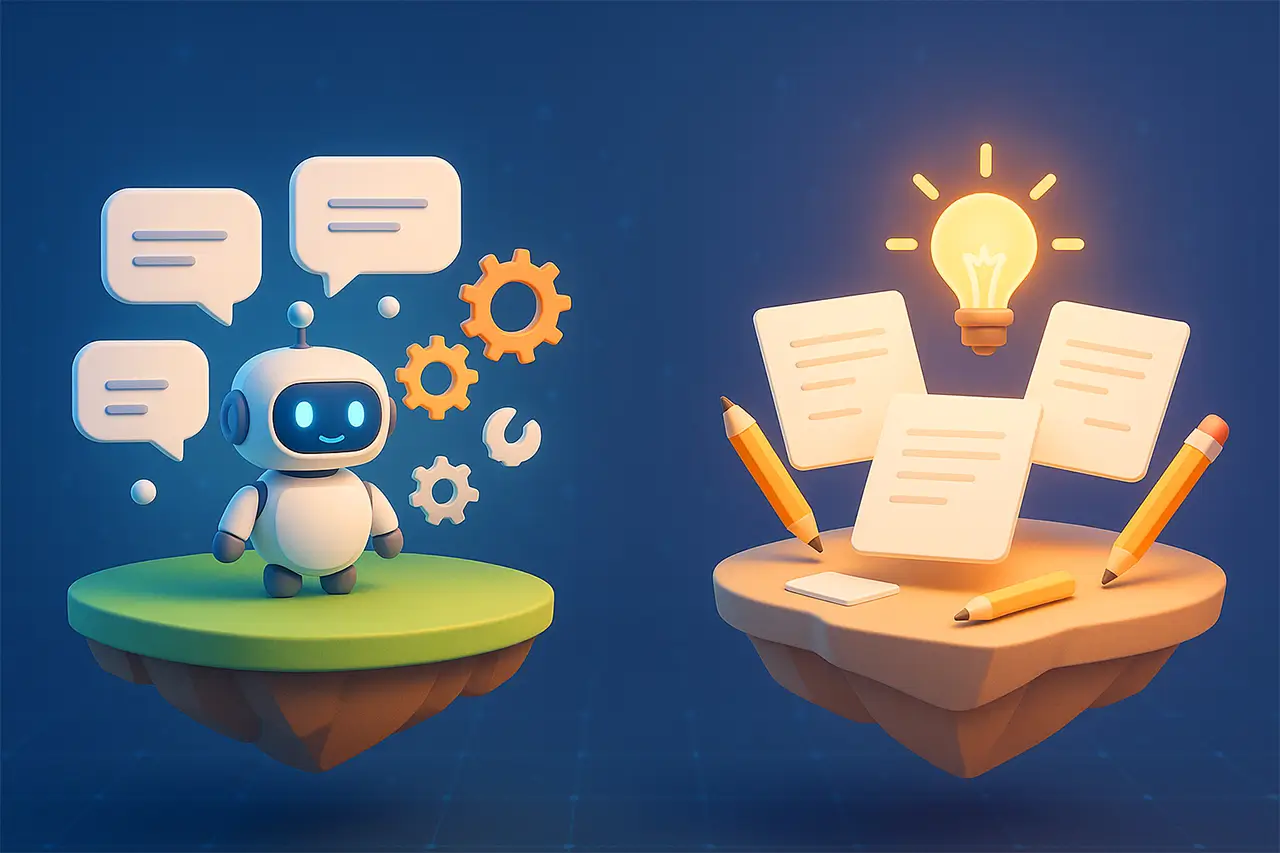
Artificial Intelligence has quickly become a daily reality in business. Today, companies of all sizes are using AI-powered tools to generate content, answer support questions, plan marketing campaigns, and streamline their operations. In this landscape, two terms frequently surface: GPTs and prompts. While they’re closely connected, they’re not the same—and knowing the difference will help you harness AI more effectively for your business.
What Is a GPT?
GPT stands for Generative Pre-trained Transformer. This is the “engine” of the AI: a powerful language model trained on vast amounts of text to understand natural language and generate human-like responses.
Within ChatGPT, “custom GPTs” function as specialized agents. Instead of always using the standard version, you can configure or commission a custom GPT to perform a specific set of tasks. For example:
- An ecommerce business might have a GPT that writes SEO product descriptions or answers customer questions about inventory.
- A medical practice could develop a GPT that summarizes health topics in plain language.
- A legal team might use a GPT to draft letters and standard contracts.
Think of GPTs as highly skilled digital team members—you can train or tailor them for certain departments or workflows, increasing their efficiency and accuracy in those areas.
What Is a Prompt?
A prompt is the instruction or input you give to a GPT. It’s the text you type that tells the AI what you want it to do.
Prompts can be simple—“Draft a welcome email for new clients”—or complex, such as “Write a 700-word article about the benefits of remote work, citing recent industry studies, in a conversational tone that encourages readers to subscribe to our newsletter.”
Prompts are crucial because they direct the AI’s focus. A vague prompt usually results in incomplete or generic answers, while precise, detailed prompts yield high-quality, actionable outputs. If the GPT is a car, the prompt is the driver giving clear directions.
How GPTs and Prompts Work Together
GPTs and prompts are two sides of the same coin—they rely on each other to produce results. Even the most advanced or customized GPT will miss the mark if the prompt is unclear. Conversely, a thoughtfully crafted prompt can help standard GPTs deliver highly useful results.
For business owners, this creates double the opportunity: design custom GPTs that fit your industry AND develop a library of strong, reusable prompts. Many successful companies do both, combining the unique strengths of tailored GPTs and well-tested prompts for a powerful AI strategy.
Why Use GPTs in Your Business?
Custom GPTs deliver major advantages for businesses:
- Consistency: Ensure every email, product description, or policy remains on-brand with the correct tone and details.
- Efficiency: Automate repeatable writing, support, or content tasks so your team can focus on higher-value work.
- Accuracy: Reduce mistakes and maintain quality by training GPTs for your specific terminology, products, or services.
Whether you’re in real estate, healthcare, law, or ecommerce, custom GPTs dramatically speed up repetitive work and enable you to serve customers faster and better.
How Strong Prompts Supercharge AI Results
Well-written prompts are just as important as well-trained GPTs. Even if you use a generic AI assistant, specific, clear prompts will get you the best outcomes. With strong prompts, you can:
- Get highly relevant, on-brand copy with less need for revision.
- Standardize instructions for your team to streamline output and ensure consistency.
- Speed up content, support, brainstorming, and more by reusing your most effective prompts across projects.
If you’re new to AI, focusing on prompt-writing skills will immediately improve the quality of your results, even without investing in custom GPTs.
Common Challenges and Best Practices
While GPTs and prompts unlock new efficiencies, there are some pitfalls to watch for:
- Over-reliance on AI: Remember, AI is a tool—not a replacement for human insight. Always review important or sensitive content before publishing or making major decisions.
- Vague Instructions: Generic prompts like “write something about sales” are too broad. Be specific about format, audience, and details for best results.
- Customization Hurdles: Creating custom GPTs that truly fit your industry requires investment in data and setup. Start small and iterate to improve performance.
Safety, Privacy, and Reliability
Safety should be top priority. While ChatGPT and its platforms are designed with strong privacy standards, avoid placing sensitive customer data, passwords, or proprietary information in prompts or custom GPTs. Use AI for drafts, brainstorming, and planning—finalize confidential work yourself.
Rely on human oversight for high-stakes industries (healthcare, legal, finance), as AI can occasionally generate plausible but inaccurate or outdated information. Accuracy will improve as you refine your prompts and tune your GPTs over time.
Business Results You Can Expect
By combining the right GPTs and prompts, businesses can:
- Produce content, support, and marketing materials faster than ever before.
- Launch campaigns and products more efficiently.
- Establish clearer, more consistent client communication.
- Improve customer satisfaction and save costs by automating repeatable work.
Clients benefit from timely, professional responses and access to a consistent and reliable experience—while you reclaim hours to focus on growth.
Conclusion
The key to effective AI in business is knowing the distinction: GPTs are your specialized digital assistants, and prompts are the instructions that guide them. One can’t work without the other. As you refine your prompts and explore the world of custom GPTs, you’ll find new ways to streamline, automate, and excel.
Start by perfecting your prompts for everyday tasks, then experiment with custom GPTs as your needs grow. This balanced approach will help you get the most value from AI—improving productivity, securing your data, and strengthening your brand.













0 Comments